
Culligan Reverse Osmosis System: Models, Output and Upkeep
Compare Culligan Aquasential RO and Smart RO by tank-rated output, contaminant claims, feed-water limits, maintenance and ownership cost.
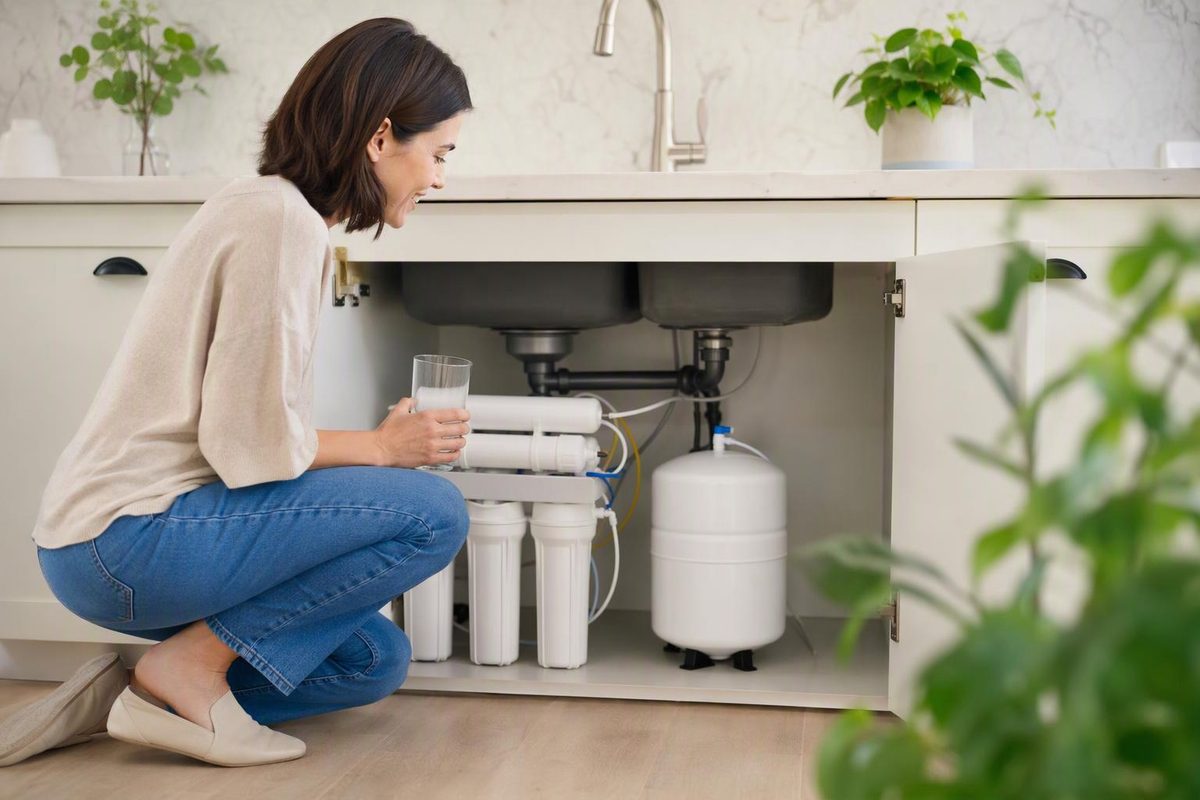
For Culligan’s Aquasential RO and Smart RO, compare tank-rated production of 27.8 and 34.1 gallons per day—not just the advertised 50 and 75 GPD. Culligan identifies those larger numbers as membrane-element specifications; the lower figures describe system production into a pressurized storage tank. That distinction matters when filling brewing vessels or supplying several drinking-water uses. Culligan’s owner’s guide, revision G, October 2024
Start with the exact model and cartridge configuration. The comparison below covers the U.S. Aquasential products listed by Culligan as of October 18, 2026; do not apply these specifications or replacement schedules to an older Culligan system without checking its own manual.
Aquasential RO versus Smart RO
| Specification | Aquasential RO | Aquasential Smart RO |
|---|---|---|
| Membrane-element rating | 50 GPD | 75 GPD |
| System production into pressurized tank | 27.8 GPD | 34.1 GPD |
| Published recovery rating, tank bypassed | 39.2% | 52.8% |
| Published efficiency rating, simulated daily use | 23.2% | 54.7% |
| Listed storage tank capacity | 3 gallons | 3 gallons |
| Listed system dimensions, L × W × H | 19.0 × 5.7 × 17.8 inches | 19.0 × 5.7 × 17.8 inches |
| System power specification | N/A | 12 VDC, 20 W |
| Monitoring options | Optional faucet filter/membrane indicator | Filter alerts, TDS-rejection monitoring and app connectivity |
Specifications come from Culligan’s owner’s guide and its Smart RO product page. The complete-system output tests used 50 psi and 77°F water; these are laboratory ratings, not guaranteed output in your kitchen.
GPD is not faucet flow, and listed tank capacity is not a promised dispensing volume. Ask the installer how many gallons the filled tank will deliver before flow falls, and how long it will take to refill at your measured pressure and winter water temperature. Culligan states that colder water slows production and that pressure, dissolved solids and other feed conditions affect performance. Operating factors
Culligan defines recovery for operation without the storage tank, or with it bypassed. Its efficiency rating measures the treated-water share of system feed water under conditions approximating daily usage. The latter is the more relevant comparison for tank-based household use, but neither guarantees your wastewater ratio. Ask for expected reject-water use with your proposed setup. Owner’s guide: output performance data
The Smart model is worth considering if its higher rated output and maintenance alerts solve a practical need. It requires power to operate; its electronics do not replace verification of the installed cartridges’ contaminant claims.
What does it treat?
Culligan markets configurable systems, not one fixed filter package. Its performance data separates the standard postfilter configuration from Total Defense, Total Defense with Mineral Boost, arsenic-specific and Advanced Post Tank cartridges.
| Water concern | What to verify before ordering |
|---|---|
| Lead, fluoride or high dissolved solids | The exact model’s corresponding reduction claim in the performance data sheet |
| PFAS, VOCs or listed pharmaceuticals | The specified Total Defense or Total Defense with Mineral Boost configuration and its rated capacity |
| Arsenic | Laboratory results, including arsenic form where needed; the standard membrane and arsenic-specific cartridge have different application limits |
| Nitrate/nitrite | The exact model, including whether it is the Smart RO Nitrate variant, plus the data sheet’s feed-water and pressure conditions |
| Bacteria or viruses | The applicable Advanced Post Tank Filter configuration and its NSF Protocol P231 listing—not a general RO claim |
These distinctions are documented in Culligan’s configuration-specific performance data sheets. Its “Total PFAS” claim covers seven named compounds, not every PFAS, and should not be read as a guarantee of compliance with drinking-water limits. Before purchase, request a current listing in the WQA certified-product directory matching the full model and cartridges, with your target contaminant explicitly named.
Do not treat ordinary RO as a substitute for disinfection. Culligan warns against using these systems on microbiologically unsafe or unknown-quality water without adequate disinfection, except for applicable configurations using its certified Advanced Post Tank Filter. Manufacturer’s use warning
Likewise, the Smart RO’s membrane indicator tracks TDS rejection. It is not an individual lead, arsenic, PFAS or bacterial test. Filter-life indicators track time and/or volume; they do not replace contaminant-specific testing when needed. Indicator definitions
Check the incoming water and installation
The guide lists these feed-water limits:
- Pressure: 40–120 psi.
- Temperature: 33–100°F; cold-water supply only.
- TDS: up to 2,500 mg/L.
- Hardness: 0–10 grains per gallon. Culligan strongly recommends a softener above 10 gpg and warns that higher hardness shortens membrane life without one.
These are operating limits, not promises of rated production throughout the range. Have the installer check the full feed-water specification, cabinet layout, separate tank space, drain connection and cartridge-service clearance. Culligan specifications
A dedicated drinking-water faucet is one option. Culligan also offers ClearLink PRO, which switches between RO and tap water through the existing faucet. Ask whether your faucet and plumbing are compatible and whether that accessory is included in the quote. Aquasential product options
If chlorine taste is the only problem, compare a suitable carbon filter before committing to RO. Carbon can address chlorine without the RO membrane’s broader mineral reduction. EPA notes that less water-intensive filtration can be sufficient for some treatment needs. See our under-sink filter selection guide. University of Nebraska–Lincoln Extension; EPA WaterSense
Replacement filters and ownership cost
“Up to two years” is an option, not a universal replacement interval. Culligan’s guide lists one- and two-year prefilters; specialty and postfilters have limits of one year or 1,000 gallons, or two years or 2,000 gallons, depending on the cartridge. Replace at the applicable time or volume limit, whichever comes first. High sediment, chlorine, turbidity or hardness may require more frequent service.
The guide calls for periodic sanitization, typically annually, and annual checks of membrane performance, tank pressure, flow and drain condition. Its general membrane replacement guidance is 3–5 years, subject to water quality and performance. Culligan recommends dealer servicing and sanitization. Care and maintenance instructions
Record the full system model and each installed cartridge’s part number before ordering. A similar-looking cartridge or matching stage count is not enough; use our RO replacement-filter compatibility guide to organize that check.
Culligan’s national product pages offer local purchase, financing or rental arrangements rather than a single installed price. Request an itemized quote covering:
- Equipment, tank, faucet and optional cartridges.
- Installation, drain work and any pretreatment.
- Replacement cartridges, membrane, sanitization and service labor.
- Rental inclusions, financing charges and applicable warranty conditions.
Compare the five-year total for the same treatment configuration, not an entry-level price against a fully equipped system. Culligan purchase options
For homebrewing and coffee
RO supplies a low-mineral starting point for brewing, but the water still needs to suit the recipe. Mineral additions and mash-pH adjustment may remain necessary. Brew Your Own’s RO brewing reference
Culligan’s optional Mineral Boost adds calcium back to the water. If you want a measured brewing profile, request the expected finished-water composition—or choose the non-remineralizing configuration and make controlled additions yourself. For coffee equipment, check the machine manufacturer’s water requirements before selecting that option. A drinking-water taste feature is not, by itself, a specified brewing-water recipe. Mineral Boost product description