
What Is a Water Purifier? Meaning and Filter Differences
Understand what a water purifier does, how purification differs from filtration, and which certified claims matter for drinking-water safety.
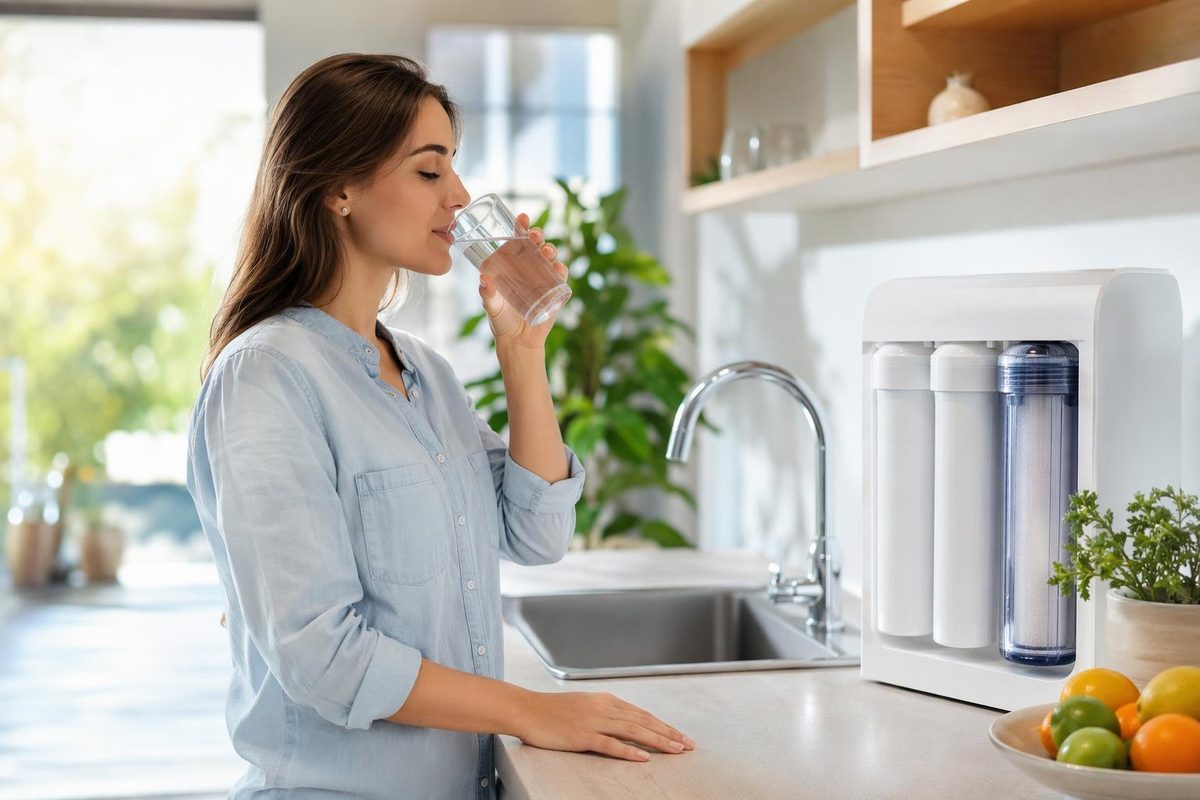
A water purifier is a device or system intended to make water safer to drink by reducing contaminants or inactivating harmful microorganisms. The name alone does not establish what it treats: even a certified purifier is not necessarily effective against every contaminant. What matters is the exact model’s documented performance, not the word “purifier” on the box. NSF explains this limitation.
Purification vs. filtration: the terms overlap
Filtration describes a treatment process. In general product descriptions, purification describes an intended result, but needs a specific performance claim to be meaningful.
| Term | What it means | What it does not establish |
|---|---|---|
| Filtration | Substances are trapped in pores or held on a filter’s surface. | That the filter removes every germ or dissolved chemical. |
| Disinfection | Treatment kills or inactivates harmful microorganisms; UV is one example. | That dissolved chemical contaminants are removed. |
| Purification | Water is treated to reduce specified contamination, potentially using several processes. | That the finished water is contaminant-free or suitable for every source-water condition. |
The process distinctions are described in CDC’s home water-treatment overview; NSF cautions that certification is contaminant-specific.
It is therefore misleading to say that “filters only improve taste, while purifiers make water safe.” Some filters reduce health-related contaminants or microorganisms. Conversely, a treatment that disinfects water may leave chemical contamination untreated.
For example, reverse osmosis uses a membrane and can reduce germs and selected dissolved chemicals. UV disinfects without removing dissolved chemicals. Distillation boils water and collects the condensed vapor, leaving many contaminants behind, although some volatile chemicals can carry over. These are different treatment mechanisms—not interchangeable promises of purity. CDC details their capabilities and limits.
“Microbiological water purifier” has a specific tested meaning
In the U.S. certification context, NSF P231 is a protocol for microbiological water purifiers. NSF’s listings identify bacteria, virus and live-cyst reduction claims for certified products. That is a more specific claim than simply advertising “purified water.” See NSF’s P231 listings.
Microbiological performance does not establish removal of lead, nitrate, fluoride or every other chemical. Those require their own applicable reduction claims. Likewise, NSF/ANSI 42 addresses aesthetic effects such as chlorine taste and odor; it is not proof of microbiological purification. NSF’s standards guide explains the distinction.
What the name means for your home
Start with the water problem. Review your utility’s annual water-quality report or test private-well water, then match treatment to the identified concern. Clear appearance and good taste are not reliable proof of safety. Most ordinary pitcher and refrigerator filters are not designed to remove germs. CDC’s filter-selection guidance covers these checks.
If your drinking water is already safe and you only want less chlorine taste, a carbon water filter may meet that task without broader purification claims. If you need contaminant treatment, check the exact model’s certified claim, operating limits and maintenance instructions. Replace filters according to the manufacturer’s recommendations to keep treatment working properly. CDC explains the maintenance requirement.