
Best Whole-House Well-Water Filters for Iron and Odor: 3 Picks
Compare SpringWell WS1, iSpring WGB32BM and Matrixx inFusion for well-water iron and odor, with flow limits, backwash needs and upkeep.
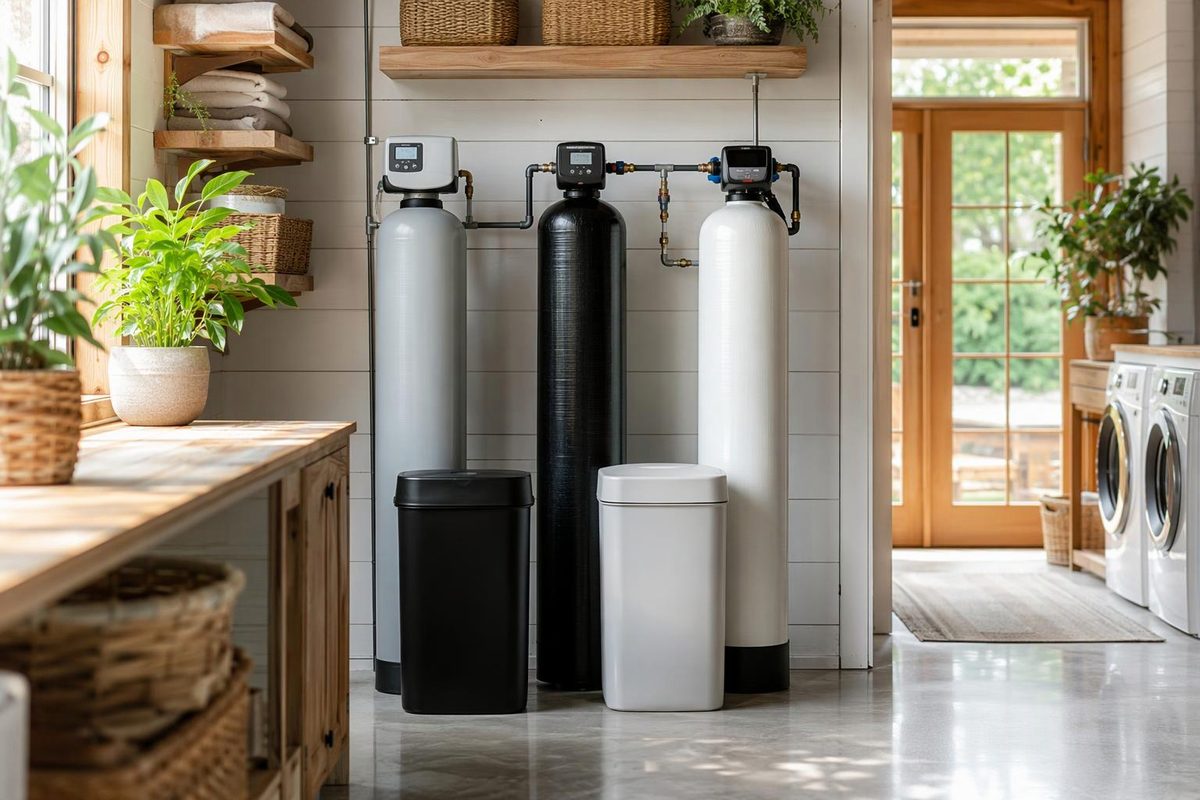
For tested well water with iron staining or hydrogen-sulfide odor, consider SpringWell WS1 for air oxidation without chemical refills, iSpring WGB32BM for cartridge-based iron/manganese treatment, or US Water Systems Matrixx inFusion for higher iron or odor loads that warrant peroxide injection. Each recommendation depends on your lab results and available flow—not bathroom count alone.
These are specification-based picks, not a ranking from comparative performance testing or universal drinking-water safety systems. If your only measured problem is sediment, a simpler sediment filter may be the better purchase. Hardness, microbes and contaminants such as nitrate require separate treatment decisions.
Compare the three systems
Manufacturer specifications checked November 3, 2026. Concentration limits below are advertised treatment limits, not guarantees that every combination of contaminants will reach an acceptable outlet level. GPM means gallons per minute.
| System and best fit | Published treatment limits | Published flow | Main ownership trade-off |
|---|---|---|---|
| SpringWell WS1: air-oxidation pick for iron and odor | Iron up to 7 ppm; hydrogen sulfide up to 8 ppm; manganese up to 1 ppm | 12 GPM service; 5 GPM backwash in the installation manual | No oxidant refills, but needs power, a drain and adequate backwash supply |
| iSpring WGB32BM: cartridge pick for iron/manganese | Iron up to 3 ppm; manganese up to 1 ppm | 15 GPM peak | No automatic backwash drain; three cartridges to monitor and replace |
| Matrixx inFusion: peroxide-injection pick for higher loads | Iron up to 20 ppm; hydrogen sulfide up to 30 ppm; manganese up to 1 ppm; stated pH range 6–9 | 10, 15 or 20 GPM peak; corresponding backwash rates 5, 8 or 10 GPM | Adjustable chemical dosing, with peroxide purchases, pump upkeep and more equipment space |
Service and peak ratings are not interchangeable. Ask each supplier for the treatment flow and pressure loss appropriate to your actual contaminant concentrations before comparing these numbers as though they were equivalent.
SpringWell WS1: choose it when air oxidation fits
The WS1 uses an air pocket to oxidize dissolved contaminants, then captures the resulting particles in its media bed. Backwashing flushes captured material to a drain and the system replenishes its air charge. Its main advantage over peroxide injection is avoiding a solution tank and recurring oxidant refills. SpringWell lists an operating pH range of 6.5–10 for the WS1. Product specifications
Choose it when your water falls within the published limits, the supplier approves the complete analysis, and your well can sustain its backwash requirement. The installation manual lists 5 GPM backwash and a tank height of 64 inches with the control head, so check both hydraulic capacity and clearance. WS1 manual
Do not read “chemical-free” as “maintenance-free” or “disinfected.” SpringWell explicitly warns against using this iron filter where water is microbiologically unsafe. As of November 3, 2026, it also holds well-system orders pending water-test review—a useful compatibility check, but not a substitute for treated-water testing. SpringWell product page
iSpring WGB32BM: choose cartridges when the load is manageable
The WGB32BM combines a 5-micron sediment cartridge, a carbon block and an FM25B iron/manganese cartridge, using 20 × 4.5-inch cartridges. Consider it when you prefer cartridge changes to a powered backwashing tank and your iron and manganese are comfortably within its stated limits. Unlike the other two picks, the cited specifications do not give a quantified hydrogen-sulfide treatment limit; do not choose it for a significant sulfur-odor problem without application-specific confirmation. iSpring specifications
Its most important buying detail is capacity: iSpring advertises 50,000 gallons at 3 ppm iron for the iron cartridge, versus up to 100,000 gallons or 12 months for the carbon cartridge. Do not budget all three stages around the larger number. Cartridge capacity specifications
At an assumed 300 gallons per day, 50,000 gallons represents about 167 days of use; that arithmetic is not a guaranteed replacement interval. Heavy sediment also warrants a suitable upstream prefilter. The installation manual requires protection from freezing, extreme heat and direct sunlight, and says incoming water must not be microbiologically unsafe or inadequately disinfected. iSpring installation manual
Matrixx inFusion: choose it for dosing flexibility
Matrixx inFusion injects hydrogen peroxide ahead of a catalytic-carbon tank. Its higher advertised iron and hydrogen-sulfide limits make it a candidate when measured concentrations exceed the WS1’s published range, provided the supplier confirms the application. The package includes a metering pump, water meter and 15-gallon solution tank. Matrixx specifications
The trade-off is recurring work. Request a peroxide-consumption estimate based on your analysis and water use—not a generic monthly cost. US Water Systems says the pump tube and injection check valve typically last 1–5 years, depending on use, and catalytic carbon typically lasts 3–5 years in most applications. It also stresses scheduling backwash when household water is not being used. Matrixx maintenance instructions
The larger model is not automatically better: the 20 GPM version requires 10 GPM backwash, twice the requirement of the 10 GPM version. A well that cannot sustain that cleaning flow is a reason to reconsider sizing. Matrixx sizing table
What to settle before ordering
Send the supplier iron, manganese, hydrogen-sulfide, pH, hardness and sediment results, together with household peak demand and measured pump delivery. Request a written treatment proposal stating expected outlet concentrations, pretreatment, backwash needs and maintenance allowance. Use our well-water testing and sizing guide for that preparation.
Keep the safety decision separate:
- Microbes: these recommendations are not a complete disinfection plan. UV works better with appropriate prefiltration and does not remove chemicals.
- Hardness: calcium and magnesium removal calls for a suitable softener, not merely an iron-filter package.
- Nitrate, arsenic or other health concerns: select treatment with evidence for the specific contaminant. CDC treatment guidance
Ask for the exact model and contaminant claim in any certification listing; a general standards statement is not proof of every advertised reduction. A kitchen-only system may fit drinking-and-cooking needs, while contaminants affecting other exposures may warrant whole-house treatment. CDC filter-selection guidance
After installation, verify performance with treated-water testing. Continue the CDC’s minimum annual well testing for total coliforms, nitrate, total dissolved solids and pH, plus locally relevant contaminants, using a state-certified laboratory. If harmful germs or chemicals are detected, use a safe alternative drinking-water source and contact your health department rather than relying on improved taste or clearer water. CDC well-testing guidance