
Iron Filter for Well Water: Choose by Iron Form, pH and Flow
Match a well-water iron filter to dissolved or rusty iron, pH and manganese. Check pump flow, backwashing and maintenance before buying.
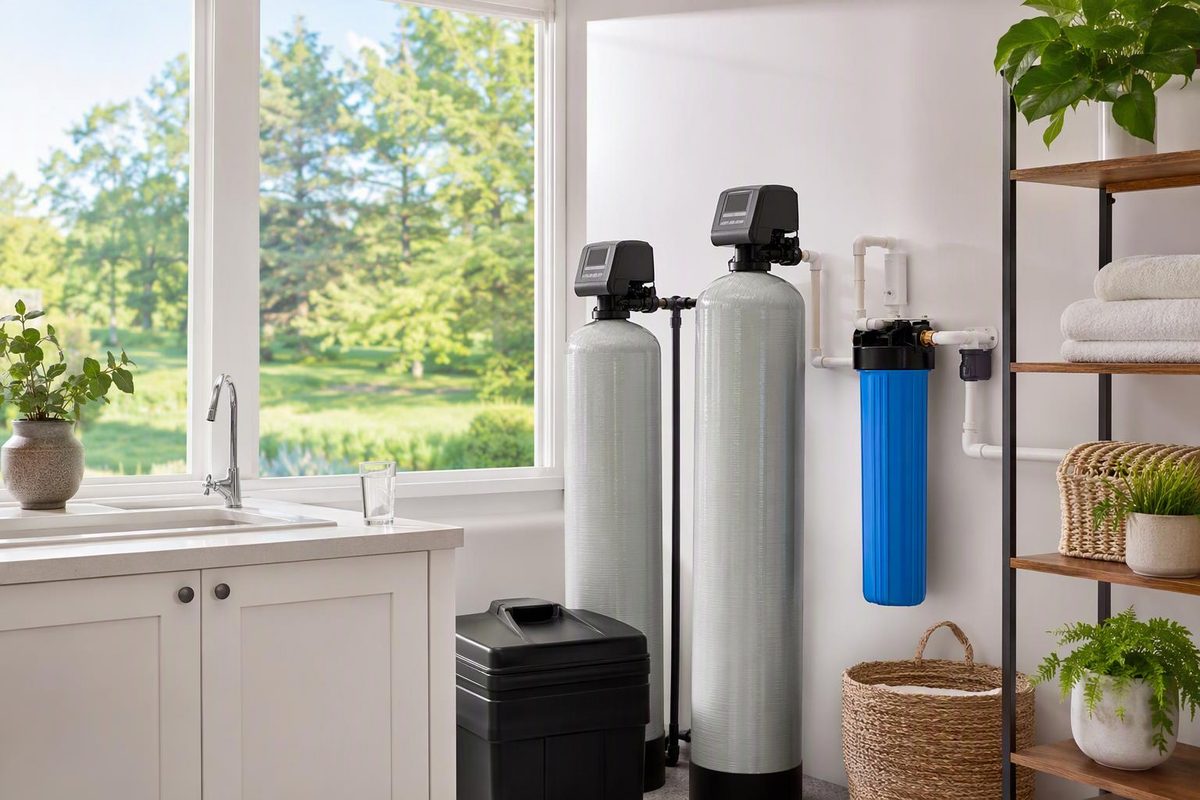
Dissolved iron usually needs oxidation followed by filtration; already-rusty particles need particle removal. A softener may handle modest dissolved iron when hardness also needs treatment. The right iron filter for well water depends on the iron concentration and form, pH, manganese, and the well pump’s ability to backwash—not simply the number of bathrooms.
Use 0.3 mg/L iron as an aesthetic reference point, not a drinking-water safety verdict. EPA’s secondary guideline addresses rusty color, sediment, metallic taste and staining; it is not a federally enforceable health limit. An iron result alone cannot establish whether well water is safe to drink. EPA secondary standards
Test before choosing treatment
Have an accredited laboratory test untreated water for iron and manganese. Include pH, hardness and alkalinity; ask about dissolved-versus-total iron testing if the water contains particles. Follow the laboratory’s sampling instructions. These measurements help distinguish a softener application from an oxidation-and-filtration application. Separately, ask your local health department which microbial and chemical safety tests your well needs. Minnesota Department of Health · Penn State Extension
Appearance offers clues, not a complete diagnosis:
| What you observe | Possible problem | Treatment direction |
|---|---|---|
| Water starts clear, then turns orange or brown after standing | Dissolved ferrous, or “clear-water,” iron | Evaluate oxidation plus filtration; a softener may fit modest levels in hard water |
| Water is rusty when first drawn | Oxidized ferric iron particles | Particle filtration; a backwashing iron filter may be more practical than rapidly clogging cartridges |
| Sticky rusty slime or swampy odor | Possible iron bacteria | Confirm with testing and evaluate the well itself—not just a new filter |
| Persistent yellow or tea-brown color | Possible organic iron or tannins | Investigate organics; ordinary aeration and iron filters may perform poorly |
These distinctions and treatment limitations are described by the Minnesota Department of Health. For sampling options, see our guide to testing for iron in water.
If you suspect iron bacteria, get laboratory confirmation. Iron bacteria are not known to cause disease, but can clog equipment and create conditions favorable to other organisms. Established deposits may require professional physical cleaning and chemical treatment of the well. An iron-removal tank downstream does not resolve that source problem. Iron bacteria guidance
Compare the treatment methods
A softener: when hardness and dissolved iron overlap
A conventional softener can remove dissolved iron by ion exchange, but oxidized iron can foul its resin. Penn State generally recommends this approach when dissolved iron is below 5 mg/L, pH is above 6.7, and hardness is 3–20 grains per gallon (approximately 50–350 mg/L). These are screening conditions, not a promise that every softener can handle 5 mg/L. Check the exact model’s limits and iron-related cleaning requirements. Penn State Extension
If hardness is acceptable, do not buy a softener solely because the water stains. Compare a dedicated iron filter first.
Air oxidation and backwashing filtration
Aeration supplies oxygen to convert dissolved iron into particles; a filter then captures them. Air-injection designs package that process differently, so the label alone does not establish performance. Check the media, iron limit, pH range, manganese claim and backwash requirement. Aeration still needs filtration and upkeep. Penn State Extension
Media chemistry matters. For example, Clack Birm requires pH of at least 6.8 for iron removal, adequate dissolved oxygen, and no oil or hydrogen sulfide. Its manufacturer also limits organic matter and specifies different conditions for manganese reduction. Do not extend those limits to every catalytic medium—or assume iron removal proves manganese removal. Clack Birm specifications
Oxidizing media or chemical injection
Oxidizing filters combine oxidation and particle capture. Some require chemical regeneration; others rely on oxygen or an upstream oxidant. Maintenance follows the particular media and system design.
Separate chlorine or hydrogen-peroxide injection followed by filtration is another option, especially for higher iron loads or difficult water chemistry. It requires controlled dosing and sufficient contact time before particle removal; improper dosing can carry health risks. Have a qualified treatment professional specify the process. Organic iron and tannins can slow or prevent oxidation, so a supplier should explain how the proposed system addresses them. Penn State Extension · Minnesota Department of Health
For that route, compare chlorine injection system controls and maintenance, rather than choosing by pump output alone.
Why a sediment cartridge is often insufficient
A sediment cartridge captures particles, not dissolved ferrous iron. It may help with small amounts of rusty sediment, but substantial iron can quickly plug sediment or carbon filters. Reverse osmosis can remove iron, yet high iron can also foul the unit; it is not a shortcut around pretreatment. Minnesota Department of Health
Check service flow and backwash flow separately
Service flow is the rate the system treats during household use. Match it to the demand from fixtures used at the same time. Backwash flow is the rate needed to clean the media and carry collected iron to the drain. Obtain both in gallons per minute (gpm).
For a concrete example—not a product ranking—Pentair’s 2026 WaterTrust Pro manual lists 5 gpm service flow and 5 gpm drain flow for its 1.0- and 1.5-cubic-foot iron systems. It explicitly requires checking that the well pump can provide the drain flow. A larger media quantity does not automatically mean a higher treatment-flow rating. Pentair installation and owner’s manual
Before accepting a quote, request:
- The exact media and system model, with limits matching your laboratory results.
- Treatment-rated service flow and pressure loss at that flow.
- Required backwash flow, duration and water volume per cycle.
- Verification that the pump can sustain backwashing at the required pressure.
- Drain routing that meets local plumbing requirements, electrical needs and installation clearances.
- A written treated-water target for iron—and manganese, if present.
Use our well-water whole-house sizing guide when iron treatment is one part of a larger system.
Budget for upkeep and verify the result
“Chemical-free” does not mean maintenance-free. Backwashing removes accumulated particles; valves and drain-flow controls need inspection. Chemical systems also need solution refills and dosing checks. Media replacement intervals are model-specific: Pentair’s cited manual calls for replacement every three to five years, potentially sooner with high iron—not a universal lifespan for iron filters. Penn State Extension · Pentair manual
Keep the untreated-water report as your baseline. After commissioning, test treated water against the agreed target, then follow the manufacturer’s monitoring schedule. For coffee or brewing, iron removal may address metallic taste, but it does not define hardness, alkalinity or the rest of the water’s mineral profile. Measure those separately before adjusting beverage water.