
New Water Purifier Side Effects: What to Do if You Feel Unwell
What to do if nausea or diarrhea starts after using a new water purifier, when to seek medical help, and which installation checks to make.
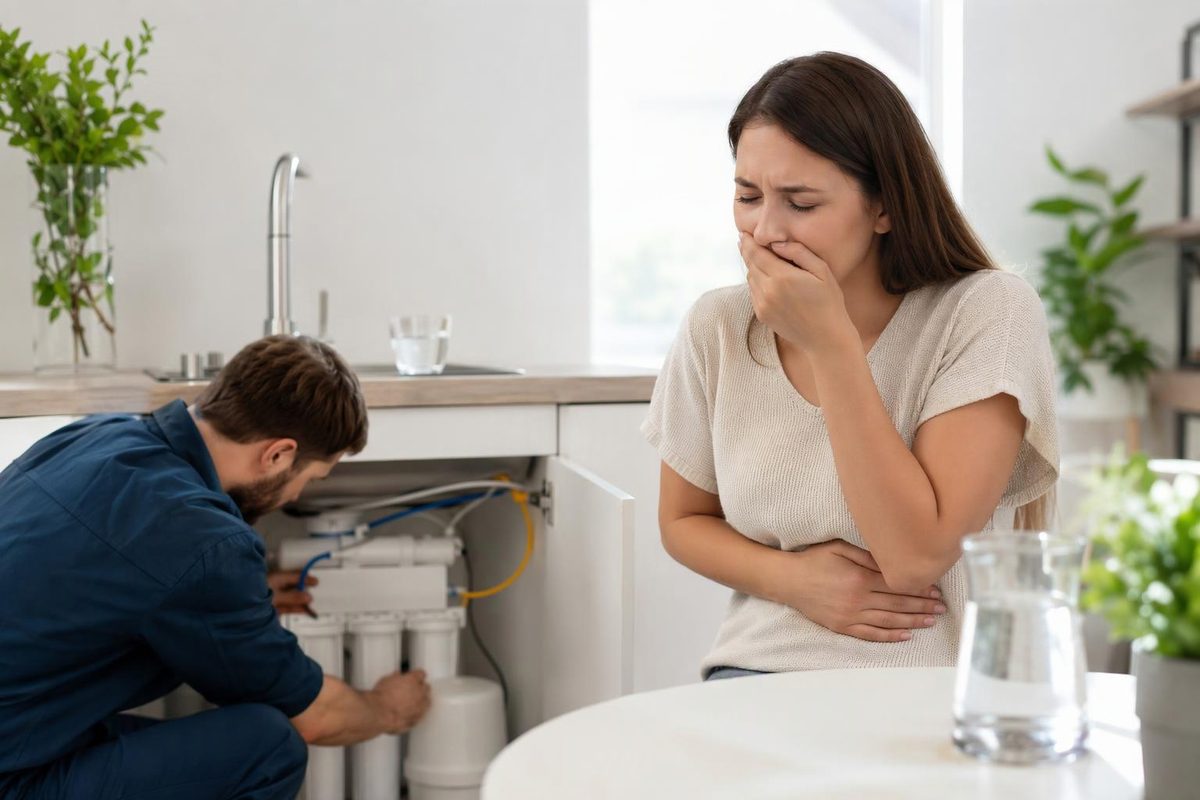
If nausea, stomach cramps, or diarrhea starts after you begin drinking from a new water purifier, pause drinking its output and use a known-safe alternative while you investigate. Do not assume the symptoms are a “detox” or an adjustment period, and do not deliberately drink more to test your reaction.
The timing is worth recording, but it does not establish that the purifier caused the illness. Common causes of acute diarrhea include viral gastroenteritis, food poisoning, and medication side effects; contaminated food or drinks can also transmit illness. NIDDK’s guidance on diarrhea explains these possibilities.
Deal with symptoms before troubleshooting
Contact a doctor right away for frequent vomiting, severe abdominal or rectal pain, black and tarry stools, blood or pus in stools, a change in mental state, or signs of dehydration. Dehydration signs include urinating less than usual, dark urine, extreme thirst, and dizziness.
For adults, diarrhea lasting more than 2 days, a high fever, or 6 or more loose stools per day also warrants contacting a doctor right away. People who are pregnant, over 65, taking antibiotics, or immunocompromised should keep in touch with their doctor if they have diarrhea.
For infants and children, do not apply the adult waiting period. Call a doctor for advice if a child has diarrhea; seek help right away for diarrhea lasting more than 1 day, any fever in an infant, high fever in an older child, or inability to drink enough fluids. A baby younger than 12 months with diarrhea needs medical advice right away. These warning signs and thresholds come from NIDDK.
Write down when you first used the purifier, when symptoms began, and whether anyone else who drank the water is unwell. Include recent food, medication, and travel changes when discussing the problem with a clinician.
Check the new unit’s startup instructions
Once immediate health needs are addressed, work through the exact model’s manual—not a generic flushing rule from another purifier. Preparation can differ even within one brand: BRITA’s Australian instructions specify discarding the first 2 litres for MAXTRA PRO, but rinsing and lightly rubbing both sides for approximately 30 seconds for MicroDisc. Neither procedure is a universal purifier instruction.
- Confirm the model and cartridge. Check the cartridge part number against the manual, including any optional mineral or alkaline stage. Photograph labels so the installer or manufacturer can identify the setup.
- Verify commissioning was completed. Look for required rinsing, flushing, tank filling and discarding, or sanitizing steps. If an installer commissioned it, ask what was done and compare that with the manual.
- Check assembly without improvising. Verify accessible cartridge seating, seals, tubing, and valve positions as instructed. Have the installer inspect connections you cannot confidently verify.
- Review cleaning and storage. Check the manual’s instructions for the reservoir, jug, faucet, and any containers used to collect the water. Do not add household cleaners or sanitizer to the system unless the manufacturer specifies them and the procedure.
- Check source-water suitability. Ask the manufacturer whether your supply meets the model’s feed-water requirements and whether its documented treatment claims cover your actual water concern. The word “purifier” alone is not a substitute for that check; see our guide to what a water purifier means.
Keep taste complaints separate from illness
If the only issue is unfamiliar taste, visible particles, or cloudiness, record what you see and ask the manufacturer whether it is expected during that model’s startup. Complete its specified preparation before using the water. Do not identify unknown particles as harmless filter media by appearance alone.
If the problem persists after correct startup—or anyone became ill—keep the unit out of drinking-water service while the installer or manufacturer investigates. Where contamination is suspected, ask your water supplier or an accredited drinking-water laboratory which tests and sampling points are appropriate. A normal-looking glass is not a reason to dismiss symptoms.