
Is Reverse Osmosis Water Good for You? Benefits and Limits
RO water can be suitable for daily drinking. Learn when it helps, what mineral removal means, and how to verify treatment and maintain your system.
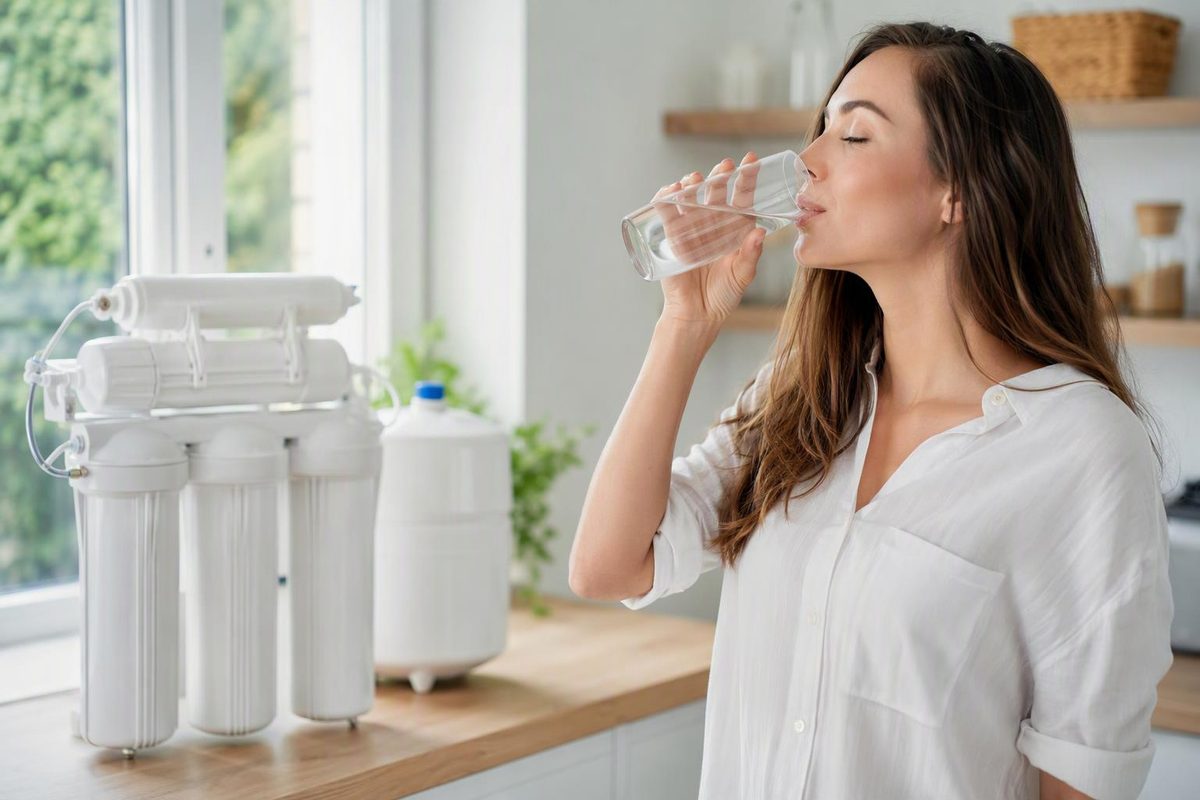
Yes—reverse osmosis (RO) water can be suitable for everyday drinking when the system is appropriate for its source water and properly maintained. Its health value comes from reducing a contaminant you need to address, not simply from producing water with fewer dissolved minerals. If your tap water contains no harmful germs or chemicals, you may not need additional filtration, according to the CDC’s home-filter guidance.
When RO offers a health benefit
An RO system uses pressure to push water through a semipermeable membrane, producing treated water and a separate reject-water stream. It can reduce a range of contaminants, but the exact system’s verified claims—not the words “reverse osmosis”—determine what you can rely on it to treat. The EPA describes RO’s potential uses, including treatment for lead, arsenic and other contaminants.
Start with your water, rather than a filter shortlist:
| Your situation | Useful next step |
|---|---|
| A test identifies lead, nitrate or arsenic | Look for a system certified for that specific contaminant, and check its operating limits. |
| Water is safe, but chlorine taste bothers you | Consider an activated-carbon filter with an appropriate taste-and-odor claim before choosing RO. |
| You use a private well | Test for harmful germs and chemicals; do not assume a kitchen RO unit addresses every problem. |
| You have no identified safety or taste problem | There may be no useful reason to add treatment. |
The CDC recommends reviewing your utility’s annual water-quality report or testing private-well water at least annually. Taste, smell and clarity cannot establish safety.
Check the claim, not just the certification number
Under NSF/ANSI 58, total dissolved solids (TDS) reduction is required, but claims such as lead, nitrate/nitrite, arsenic and fluoride reduction are optional. A system certified to that standard is not automatically certified for every one of those substances. Check the exact model’s certification listing and performance data against your water test. NSF’s explanation of Standard 58 separates required and optional claims.
A low TDS reading is not proof that water is safe. EPA treats TDS as a secondary, aesthetic water-quality parameter, rather than a substitute for testing specific health-related contaminants.
Do you need to put the minerals back?
Not routinely for nutrition if you eat a reasonably balanced diet. RO removes minerals such as calcium and magnesium. Health Canada’s guidance notes that, in Canada, drinking water is a minor source of these minerals compared with food, and people eating a reasonably balanced diet do not need mineral supplements because they drink RO-treated water. That does not mean water contributes no minerals, or that everyone’s diet is adequate. Read the dietary-mineral guidance.
Minerals are not the only trade-off: RO can also reduce fluoride. Removing it removes a source of cavity protection, as the CDC’s filter guidance explains.
A remineralization cartridge may still be useful for taste or beverage preparation. Treat that as a separate decision from contaminant removal: adding minerals is not evidence that water has become safer.
For coffee, drinking-water suitability and brewing suitability are different questions. Very low-mineral water may give disappointing extraction. Prima Coffee’s brewing-water guidance recommends adding a coffee-specific mineral formulation to RO or distilled water rather than brewing with it unchanged. Follow your espresso machine’s water requirements as well; a drinking-water filter claim does not establish equipment compatibility.
Upkeep matters more than a “pure water” label
Any filter needs maintenance to keep working and prevent germs from growing in it. Follow the manufacturer’s replacement, cleaning, sanitizing and flushing instructions rather than a generic schedule. The CDC specifically emphasizes filter maintenance; our RO filter-changing guide covers the service sequence.
RO also uses water to carry rejected substances away. As of October 2026, EPA WaterSense requirements limit labeled point-of-use systems to 2.3 gallons of reject water or less per gallon of treated water. The label includes efficiency and performance requirements, but you still need to check the exact model’s certified contaminant-reduction claims.
Choose RO when its verified treatment solves your water problem and you can keep it serviced. For installation and ownership checks, see our under-sink RO guide.