
Low Fridge Water Pressure: Diagnose Slow Dispenser Flow
Measure refrigerator dispenser flow, isolate a restrictive filter, and check the supply line or RO system before trying to increase water pressure.
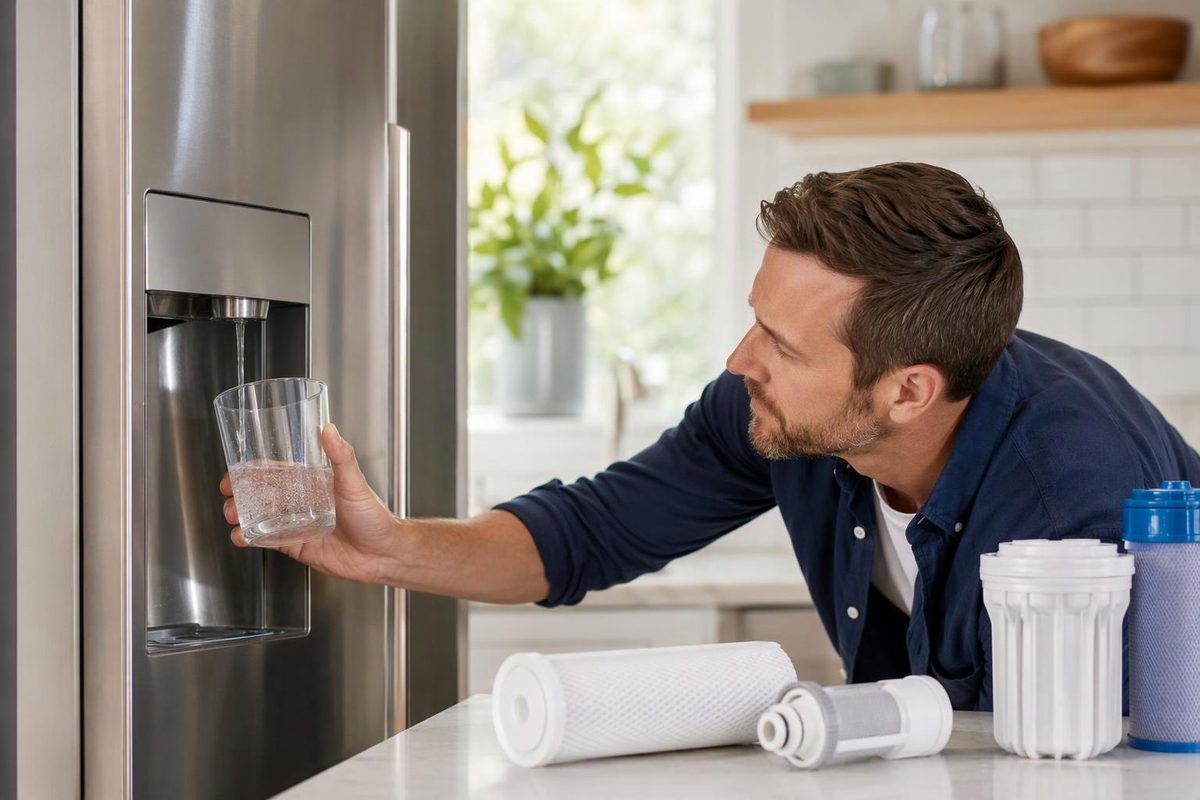
A weak refrigerator water stream does not automatically mean your home needs more water pressure. Start with a timed dispenser test, then check the filter, shutoff valve and supply tubing. A clogged or incorrectly installed filter can restrict flow even when the incoming supply is adequate.
Measure the flow first
Use a measuring jug and stopwatch. Dispense continuously for the manufacturer’s test period and record the volume. These are screening tests for flow, not measurements of pressure in psi.
| Manufacturer guidance | Dispenser flow check | Interpretation |
|---|---|---|
| GE Appliances | Collect water for 20 seconds | Less than 8 US fl oz (about 237 mL) is probably inadequate; GE describes this as a general test with variable results. |
| Samsung | Time 6 US fl oz (about 177 mL) | It should dispense in under 10 seconds. |
Use your model’s instructions rather than applying one brand’s threshold to every refrigerator. Repeat the same test after each change so you can tell which fix helped.
1. Check what changed at the filter
Slow immediately after replacement: Check that the cartridge is the correct one for the refrigerator, fully seated and locked as directed. Whirlpool notes that an improperly installed filter can reduce or stop flow and cause leaks. Reinstall it according to the model’s instructions; if the housing leaks, stop dispensing and shut off the refrigerator’s water supply. Whirlpool’s slow-flow guidance
If the stream sputters after installation or replacement, complete the prescribed flushing procedure. Trapped air can cause sputtering and post-dispense dripping; Samsung advises flushing until the stream is steady. Follow your manual’s volume and operating limits rather than assuming every fridge needs the same flush. Samsung dispenser troubleshooting
Flow declined gradually: Test for filter restriction using the manufacturer’s approved bypass procedure. GE directs owners to remove the filter, fit the bypass plug and repeat the flow test. If the dispenser fails with the filter but passes with the bypass plug, GE recommends replacing the cartridge. Extra sediment can clog a filter before its usual six-month replacement interval. Retest after installing and flushing the replacement. GE flow test · GE filter troubleshooting
Better flow without a filter does not always establish that the cartridge is clogged. Samsung notes that if a new filter still makes the difference between passing and failing its test, low supply pressure may be the problem. Continue with the supply checks rather than repeatedly buying cartridges. Samsung slow-flow guidance
Do not simply remove the filter on every model. Some require a bypass plug. Samsung’s instructions limit its filter-removal test to models manufactured in 2024 or earlier—not 2025 or later. Check your model’s procedure first. Bypass testing also removes the cartridge’s treatment from the water path; it is a diagnostic step, not proof that unfiltered water meets your treatment needs. Samsung model-year restriction
2. Check the supply path
If bypassing the cartridge does not restore flow, or a correctly installed new cartridge still dispenses slowly, check the accessible plumbing:
- Confirm the refrigerator’s water supply valve is fully open; do not force a seized or leaking valve.
- Inspect the tubing for kinks, pinches or damage, especially if the fridge was recently moved.
- If the problem began after doors were removed, check the water-line connections as directed in the manual.
Samsung identifies these as supply checks for dispenser problems. Damaged tubing needs replacement, not just repositioning. Shut off the water before disconnecting a line, and use an installer if access or fittings are unfamiliar. Samsung supply-line guidance
An old piercing-type saddle valve is another restriction worth having a plumber inspect. Whirlpool’s W10857666B manual specifically excludes piercing-type and 3/16-inch saddle valves because they reduce flow and clog more easily. Whirlpool water-supply requirements, page 5
3. If the fridge uses reverse osmosis
Check the RO supply before buying another refrigerator cartridge. Whirlpool’s manual advises checking for a blocked RO sediment filter and allowing the storage tank to refill after heavy use. It also warns that the refrigerator cartridge can further reduce pressure when used with RO. Any cartridge bypass must still follow your refrigerator’s instructions. Whirlpool RO guidance, page 5
If there is an external cartridge on the fridge line, include it in the maintenance check. Our inline water filter guide covers tubing, fitting and replacement compatibility.
When pressure testing or service is needed
If flow remains inadequate after these checks, have a plumber assess the supply at the refrigerator connection, including pressure against the exact model’s required range. For example, GE’s general filtered-refrigerator guidance specifies 40–120 psi; that is not a universal refrigerator specification. GE pressure guidance
Low measured inlet pressure calls for supply-side diagnosis. If the supply meets the model’s requirements but dispenser flow remains poor, request appliance service. Do not raise a household regulator or add a booster pump merely because the dispenser is slow.