
How to Get Hard Water Stains Off Windows Safely
If vinegar is permitted, use a 1:1 vinegar-water mix in the shade for 5–10 minutes, keep it damp, then rinse thoroughly and squeegee dry.
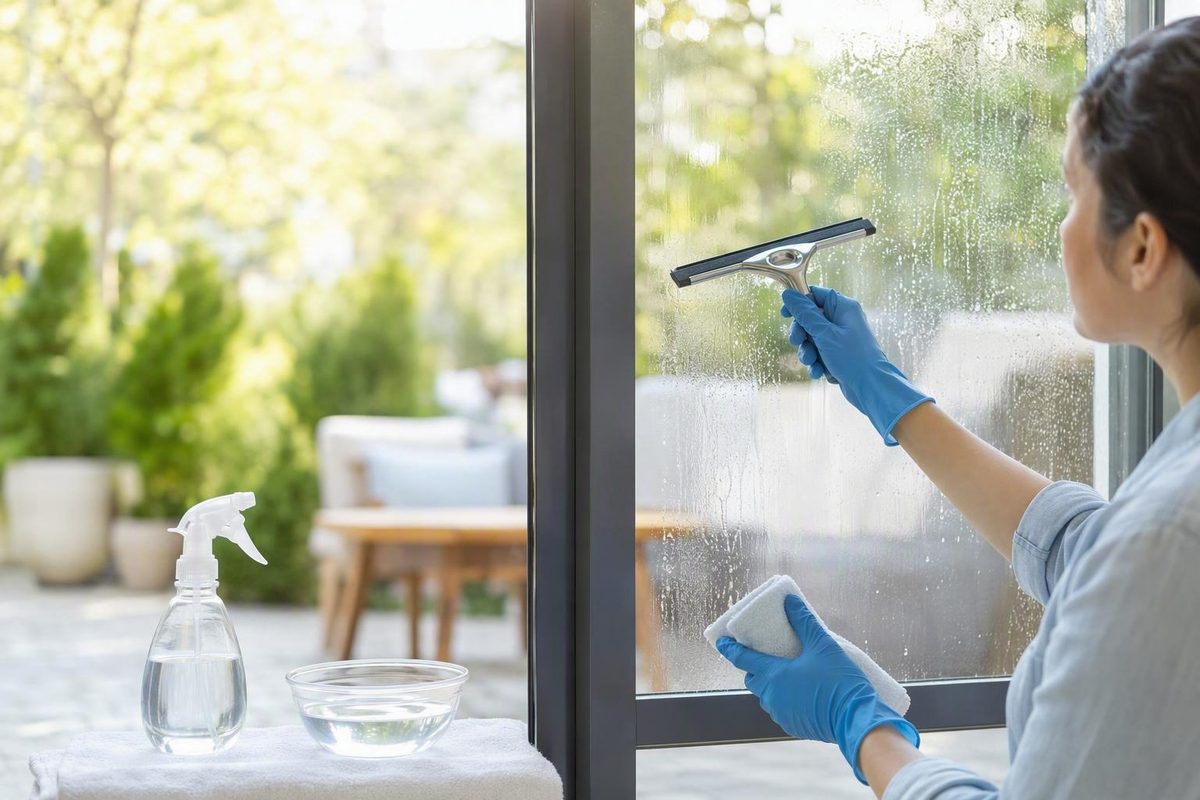
To get hard water stains off windows, first confirm that the window manufacturer permits vinegar. If it does, mix equal parts distilled white vinegar and distilled water, spot-test the solution, and apply it in the shade for 5–10 minutes without letting it dry. Wipe gently, rinse thoroughly, and squeegee dry. This is a reasonable first treatment for light or moderate deposits, not a guaranteed cure for old buildup, damaged coatings, or other causes of cloudy glass (see the stain-removal procedure).
The quick method for light or moderate hard-water stains
Gather the following supplies:
- A spray bottle or bowl
- Distilled white vinegar
- Distilled water
- Clean microfiber cloths or a soft, nonabrasive sponge
- Clean rinse water
- A lint-free drying cloth
- A squeegee
Once you have confirmed that vinegar is allowed on the exact glass and coating, follow these steps:
- Remove loose debris without grinding it into the glass. Follow the window manufacturer’s preparation instructions. Gently lift or brush away loose particles with a clean, soft tool rather than rubbing visible grit across the pane. Pay particular attention to corners and the bottom edge, where debris can collect.
- Mix the cleaner. Combine one part distilled white vinegar with one part distilled water.
- Spot-test the solution. Apply it to an inconspicuous corner. Rinse and dry the test area, then check for discoloration, scratching, film damage, or another unexpected surface change before continuing.
- Work in the shade. Direct sunlight can make the solution dry before it is removed.
- Wet the stained area. Spray the solution onto the glass or apply it with a soaked microfiber cloth. Control drips and follow the manufacturer’s instructions for protecting nearby window components.
- Allow 5–10 minutes of contact. Keep the stained area damp throughout that period. Do not use hour-long or overnight soaking as a default method because compatibility has not been established for every coating or window assembly (review the supported contact time).
- Wipe gently. Use light pressure with a clean microfiber cloth or soft, nonabrasive sponge. If the tool begins to drag, rewet the surface instead of pressing harder.
- Rinse thoroughly. Use clean water to remove the vinegar solution and loosened residue.
- Dry from top to bottom. Pull a squeegee down the glass, wiping its blade between strokes. Catch remaining water with a clean, lint-free cloth.
If the pane improves but some spots remain, one more gentle treatment may help. If there is no visible improvement, do not assume that extra pressure or a harder scrubber is the answer.
Check the glass type before applying any cleaner
A window may have a factory Low-E surface, low-maintenance coating, HeatLock layer, aftermarket film, tint, hydrophobic treatment, or another specialized finish. Generic glass-cleaning advice does not establish compatibility with every one of these surfaces.
Look for a logo etched into a corner of the pane, then consult the product documentation or manufacturer’s care instructions. Renters can ask the property owner or manager for the window records.
| Glass condition | First action | What to avoid |
|---|---|---|
| Manufacturer permits vinegar | Spot-test the 1:1 vinegar solution in an inconspicuous corner | Treating the whole pane before checking the test area |
| Andersen HeatLock glass | Use only mild soapy water and work outside direct sunlight | Vinegar, solvents, abrasives, and generic stain treatments |
| Low-E, low-maintenance, tinted, filmed, hydrophobic, laminated, or other specialized glass | Identify the exact product and follow its care instructions | Assuming an ordinary-glass method is compatible |
| Glass or coating cannot be identified | Begin with mild soapy water and a soft cloth while seeking manufacturer guidance | Stronger chemicals, abrasives, and prolonged soaking |
Andersen instructs owners to identify the glass type first and says HeatLock glass should be cleaned only with mild soapy water. It also warns that abrasive cleaners and metal razor blades can damage glass or its exterior coating. Stop if cleaning causes scratching, discoloration, peeling film, or another unexplained surface change (check Andersen’s glass guidance).
Use only clean, soft tools. A product marketed for glass is not automatically suitable for a particular coating, film, seal, or glazing system.
Safe access matters as much as chemical compatibility. If an upper-story or awkwardly positioned window cannot be reached from a stable working position without ladder or fall risk, leave it to a properly equipped professional (see Andersen’s window-cleaning precautions).
What to do when one vinegar treatment is not enough
Escalate one step at a time rather than immediately switching to a more aggressive chemical or tool:
- Mild soap and water. Remove ordinary dirt, oily residue, and surface grime so you can see what remains.
- Approved diluted vinegar. If the manufacturer permits it, use the 1:1 treatment described above.
- One more gentle treatment. Repeat the process only if the test area and first cleaning caused no visible surface change. Do not extend the contact time beyond the window manufacturer’s limits.
- A compatible mineral-deposit remover. Consider a commercial product only when both its label and the window manufacturer allow it on the exact glass or coating.
- Professional assessment. Stop escalating when cautious methods produce little or no improvement.
Between attempts, rinse the pane and inspect it under good light. Replace any cloth that has picked up grit.
If you move to a commercial remover, follow its label exactly. That includes restrictions on surfaces, contact time, rinsing, ventilation, handling, and protective equipment. Follow the label’s directions for protecting adjacent frames, glazing, seals, siding, masonry, or plants, and do not leave the product unattended on window components. Professional-grade acidic cleaners require particular care and are not a default household treatment (review the cautious escalation guidance).
Do not treat baking soda, steel or bronze wool, toothpaste, razor blades, mineral spirits, naphtha, strong acids, or pressure washing as universal hard-water remedies. Some of these materials appear in instructions for other contaminants or specialist applications, but that does not prove they are safe or effective for mineral deposits on your particular pane.
Stop cleaning if you notice scratching, discoloration, peeling film, or another unexpected change. At that point, more chemical exposure or harder scrubbing can compound the problem.
When the cloudiness may not be removable scale
Hard-water stains are deposits left after mineral-containing water evaporates. Calcium and magnesium are commonly associated with the residue. Typical signs include:
- Cloudy or pale patches
- White or chalky buildup
- Stubborn individual spots
- Outlines where water repeatedly pooled or ran down the pane
These patterns can result from sprinkler spray, irrigation, runoff, or repeated exposure to mineral-containing rinse water.
First clean away ordinary surface grime with mild soapy water. Rinse and dry the pane, then inspect it again.
Persistent haze also does not conclusively prove that the glass has been etched. That uncertainty is a reason to stop escalating—not a reason to keep scrubbing until the appearance changes.
Arrange a professional assessment when:
- The haze remains after a few approved, gentle treatments
- The surface changes during cleaning
- You cannot identify the glass or coating
- The next step would require stronger chemicals or aggressive tools
- The pane has damage that cannot be confidently distinguished from surface residue
An assessment may help separate removable deposits from a coating or glass problem. It does not guarantee that restoration will work, and failure of a vinegar treatment does not automatically mean the pane requires replacement.
Prevent the mineral spots from returning
Once the pane is clear, trace the source of the water. Recurring deposits are better controlled by reducing repeated wetting and evaporation than by cleaning the glass more aggressively.
- Redirect sprinklers and irrigation. Adjust heads so their spray stops short of windows and glass doors.
- Correct runoff and splash. Check for overflowing gutters, poorly directed downspouts, siding runoff, drainage problems, and water splashing from nearby concrete or stone.
- Dry exposed glass promptly. When practical, squeegee or wipe panes after sprinkler overspray or other mineral-containing water reaches them.
- Rinse cleaners away completely. Cleaner residue can leave haze and make later inspection more difficult.
- Avoid a mineral-rich final hose rinse. Use clean rinse water and squeegee the pane rather than allowing droplets to evaporate on the glass.
- Check before applying a protectant. Hydrophobic coatings and sealants are optional. Apply one only if both its instructions and the window manufacturer confirm compatibility with the exact glass, factory coating, film, and warranty terms.
The least aggressive effective method is the soundest approach: identify the glass, use diluted vinegar only when permitted, rinse completely, and dry promptly. If a few careful attempts leave the haze unchanged, stop before turning a deposit problem into surface damage. Then address the sprinkler spray, runoff, or rinse-water habit that allowed the spots to return.